
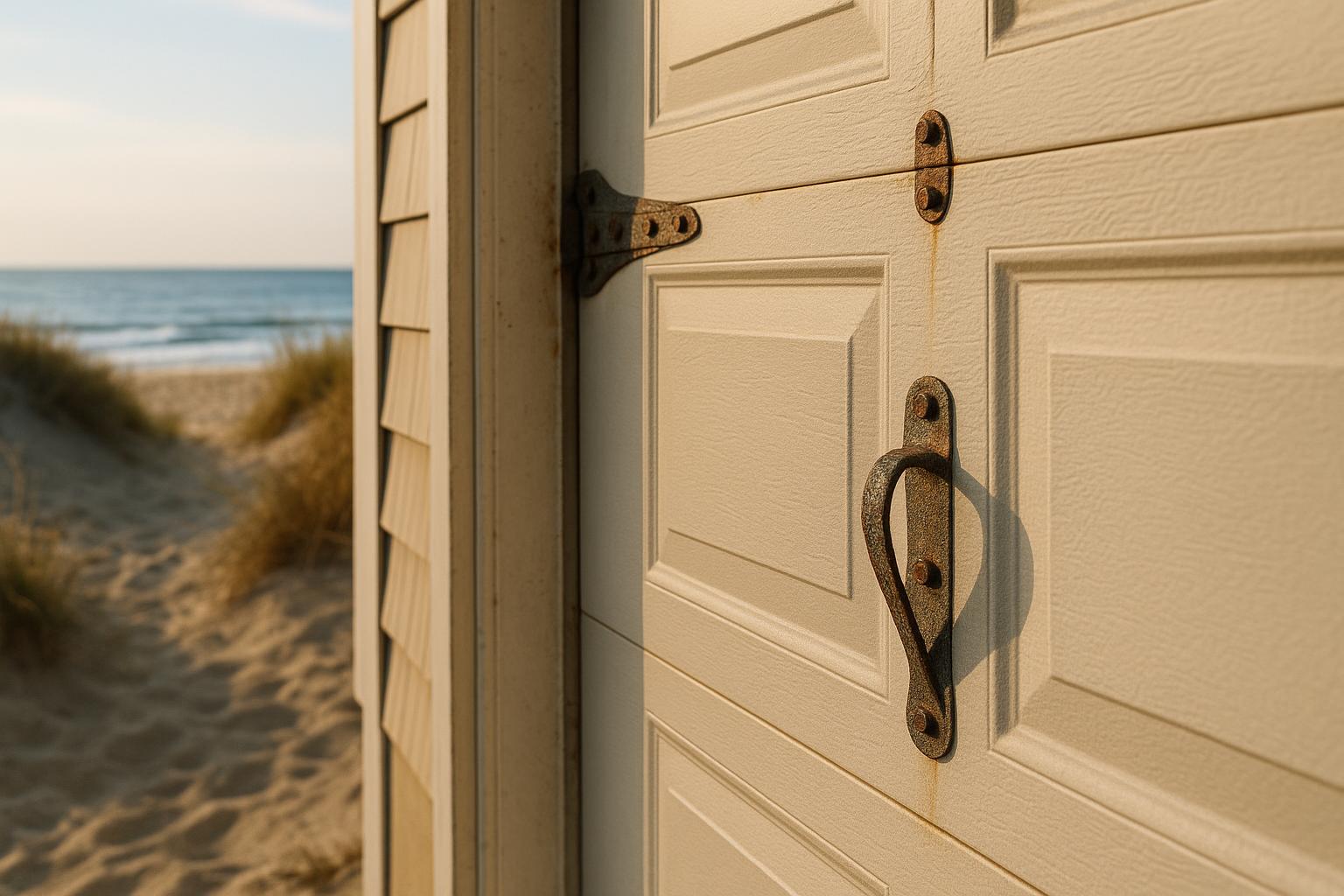
The Hidden Cost of Coastal Living on Your Garage Door
There's nothing quite like living on Long Beach Island — the sound of the waves, the ocean breeze, and the laid-back shore lifestyle. But that beautiful salt air that makes Surf City and the surrounding communities so special can also wreak havoc on your garage door. If you've noticed rust spots, stiff hardware, or a door that just doesn't operate as smoothly as it used to, salt air corrosion is likely the culprit.
At Surf City Garage Door, we see the effects of coastal weather on garage doors every single day. From Barnegat Light to Beach Haven, homeowners deal with accelerated wear and tear that inland residents simply don't experience. Understanding how salt air damages your garage door — and what you can do about it — can save you thousands of dollars and years of frustration.
How Salt Air Damages Garage Doors
Salt air contains tiny particles of sodium chloride that settle on every exposed surface of your home, including your garage door. These particles attract moisture, and when moisture and salt combine on metal surfaces, the result is rapid corrosion. Here's what happens over time:
- Springs lose their strength: Torsion and extension springs are made of steel, and salt exposure accelerates rust formation. Corroded springs become brittle and are far more likely to snap without warning.
- Tracks and rollers seize up: Salt buildup inside the tracks creates friction, causing rollers to grind and the door to move unevenly. Metal rollers are especially vulnerable.
- Hinges and brackets corrode: Every metal hinge, bracket, and bolt on your garage door system is a target for salt corrosion. Over time, these components weaken and can fail.
- Steel door panels rust: Even painted steel doors will eventually show rust spots as salt air works its way through scratches, chips, and seams in the finish.
- Opener chains and hardware deteriorate: The chain or belt drive on your garage door opener, along with the rail and associated hardware, can corrode and lose efficiency.
Which Garage Door Materials Hold Up Best at the Shore
If you're building a new home in Ship Bottom or replacing an aging door in Harvey Cedars, your choice of materials matters more than it would anywhere else. Here's how the most common garage door materials stack up against salt air:
Aluminum
Aluminum is naturally resistant to rust, making it one of the best choices for coastal properties. It's lightweight, low-maintenance, and holds up well in the salty environment along Long Beach Island. The trade-off is that aluminum doors can dent more easily than steel, but for corrosion resistance, they're hard to beat.
Fiberglass
Fiberglass composite doors won't rust or corrode at all, which makes them another excellent option for shore homes. They resist salt, moisture, and UV damage. Modern fiberglass doors come in a wide variety of styles and can even mimic the look of real wood grain.
Vinyl
Vinyl garage doors are virtually maintenance-free in coastal environments. They won't rust, rot, or require repainting. They're an especially practical choice for rental properties and vacation homes in Beach Haven and Long Beach Township where regular maintenance might not happen as often.
Steel
Steel is the most popular garage door material nationwide, but it requires extra care at the shore. If you go with steel, look for doors with a high-quality factory finish, and be prepared to inspect and touch up the paint regularly. Galvanized steel holds up better than standard steel, but no steel door is immune to salt air over time.
Wood
Real wood garage doors are beautiful but demand the most maintenance in a coastal setting. Salt air combined with humidity can cause warping, swelling, and premature deterioration of the finish. If you love the look of wood, consider a fiberglass or steel door with a wood-grain finish instead.
Practical Steps to Protect Your Garage Door from Salt Damage
No matter what type of garage door you have, taking proactive steps can dramatically extend its lifespan. Here's what we recommend to our customers throughout the Surf City area:
Rinse Your Door Regularly
This is the single most effective thing you can do. Use a garden hose to rinse down your entire garage door — panels, tracks, springs, and hardware — at least once a month. After storms or periods of heavy wind, rinse it more frequently. Fresh water washes away salt deposits before they can cause damage.
Lubricate Moving Parts
Apply a silicone-based lubricant to springs, rollers, hinges, and tracks every three to four months. This creates a protective barrier against moisture and salt while keeping everything operating smoothly. Avoid using WD-40 as a long-term lubricant — it's a solvent, not a protectant.
Inspect and Touch Up Paint
Walk around your garage door and look for chips, scratches, or bubbling paint. These are entry points for corrosion. Sand down any rust spots you find, apply a rust-inhibiting primer, and repaint with a high-quality exterior paint. Catching small spots early prevents them from spreading.
Upgrade to Corrosion-Resistant Hardware
When components need replacing, ask about stainless steel or galvanized hardware. Nylon rollers are another smart upgrade — they don't rust at all and operate more quietly than metal rollers. These small upgrades make a meaningful difference over the life of your door.
Schedule Annual Professional Maintenance
A professional maintenance visit once a year gives a trained technician the chance to catch problems you might miss. We check spring tension, test the balance of the door, inspect the opener system, and assess every component for signs of corrosion or wear. For homes right on the oceanfront, we often recommend twice-yearly inspections.
When Repair Isn't Enough: Signs You Need a Replacement
Sometimes salt damage has progressed too far for repairs to make financial sense. Here are signs it might be time for a new garage door:
- Rust has spread across multiple panels and is eating through the metal
- Springs have corroded and snapped more than once in the past few years
- The door is visibly sagging, warped, or no longer sits flush when closed
- You're spending more on annual repairs than a new door would cost over time
- The door no longer provides a proper seal, letting in wind, water, and sand
A new garage door is one of the highest-return home improvements you can make. According to industry data, homeowners typically recoup a significant portion of the cost in increased home value — something worth considering if you're thinking about selling your shore property.
We Know Coastal Garage Doors
At Surf City Garage Door, we've built our business around the specific challenges that come with maintaining garage doors at the Jersey Shore. We know which products hold up in this environment, which shortcuts to avoid, and how to help our neighbors in Surf City, Ship Bottom, Long Beach Township, and beyond get the most life out of their garage doors.
Whether you need a quick repair, a full replacement, or just want a professional set of eyes on your current setup, we're here to help. Give us a call to schedule a maintenance visit or to talk about upgrading to a door that's built to handle life by the ocean.